

With each call she makes to a BlueCross member being discharged from a health care facility, Registered Nurse Alesha VanAllman draws on her years of working with patients whose situations mirror those of members she helps now.
As an Intensive Care Unit (ICU) nurse, she cared for the most critically ill or injured patients. She later became an ICU charge nurse, supervising nursing activities and patient care, before expanding her experience in medical/surgical, labor and delivery, ER, and outpatient surgery.
With each role, she gained a broader view of patient needs.
“I was able to explain so many things to patients,” Alesha says. “It was fulfilling to be the light for someone who is not in a great place because of their condition.”
Discovering her passion and life’s work
Alesha didn’t always have her sights set on nursing. She once thought she’d work in international business after studying foreign languages in high school.
But while researching her own health condition, she was drawn to nursing and knew she’d found her life work. She pursued her nursing degree first at Cleveland State Community College and then earned her Bachelor of Science in nursing from the University of Tennessee at Knoxville.
Being a patient herself and going to college later in life taught Alesha about needing support as she balanced studies, working and caring for her young children. Later in her master’s degree program, she learned how social factors like finances, education, and availability of food or transportation can have an impact on health.
“In hospital settings, I saw firsthand that what happens after discharge relative to a person’s environment or support system often affects how they heal or whether they end up back in the hospital,” Alesha says.
That realization is something she takes into every call she’s made to members since she joined BlueCross as a transition-of-care case manager in 2024.
Some members have short hospital stays and return to daily life quickly. Others may need rehabilitation, have complex medical needs or experience life-altering events. But she and her fellow case managers can be a safety net for both.
“Patients leaving a hospital can feel overwhelmed. Our goal is to help set them up for success, so they don’t end up back there,” Alesha says.
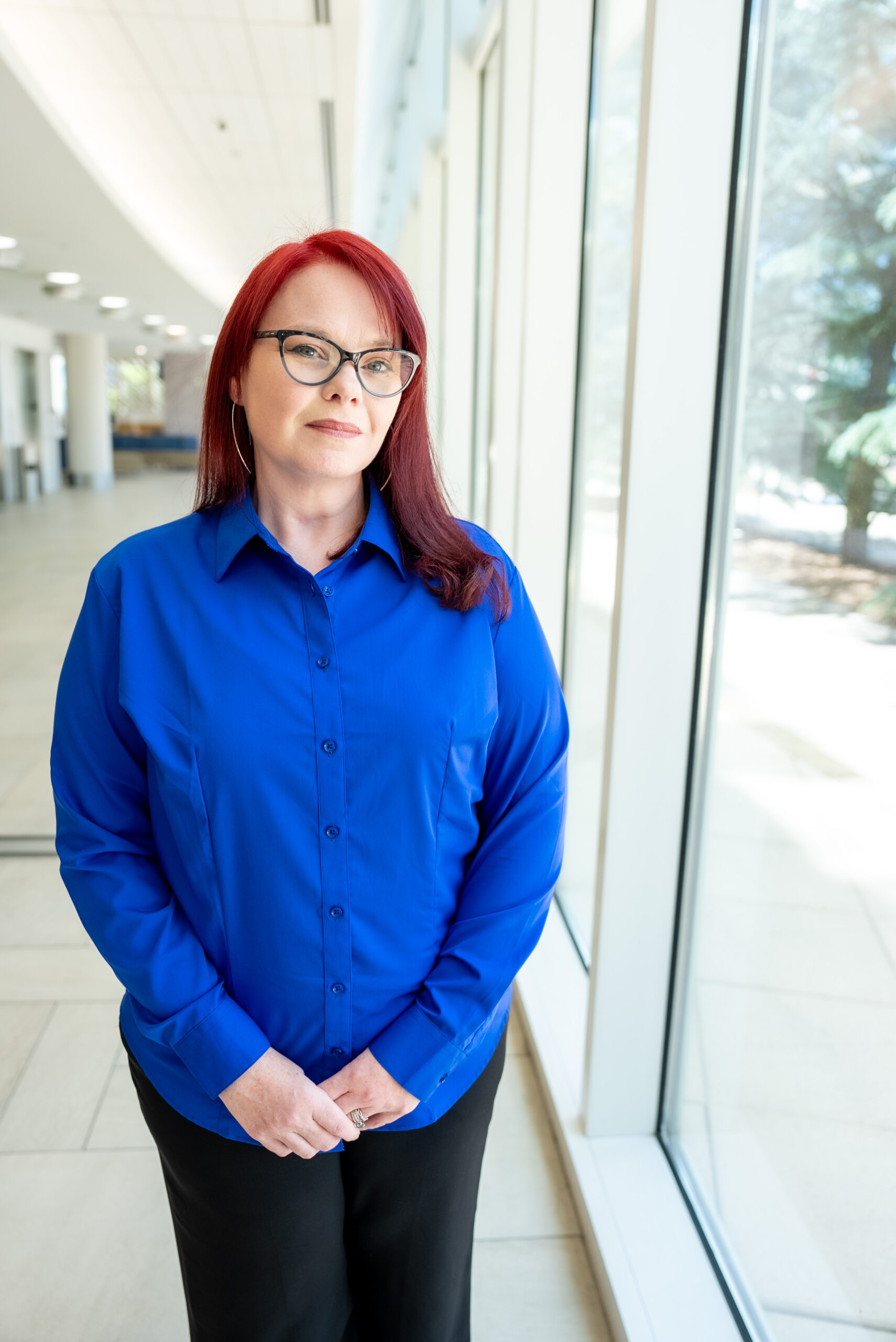 Satisfaction in helping others over hurdles
A typical day includes calls to ensure members understand their discharge instructions, medications and follow-up appointments. She reaches out to case managers at health care facilities and service providers like home health or therapy. She can also connect members to programs to help manage health conditions.
Alesha also addresses non-medical factors. If someone can’t get to the pharmacy or doesn’t understand their diagnosis because of limited health literacy, their plan of care may not work, she says.
Her greatest satisfaction comes when a member tells her they don’t feel alone in their recovery thanks to her outreach.
“Better understanding, advocacy or a follow-up call can help someone regain control of their life or be present for moments that matter,” Alesha says.
Nursing with a technology mindset
With the volume of calls that she makes – 20 to 50 on a given day – plus research, Alesha makes the most of technology to support her work.
“This role is incredibly meaningful and fast-paced,” Alesha says.
She’s helped explore how new technology, including artificial intelligence (AI), can support case managers in their day-to-day work while keeping member information protected.
She first used the tools to grow in her role as a case manager and work more efficiently on behalf of members.
“I wanted to gain different perspectives and expand my research to offer the best educational materials that could support my work with members,” she says.
That led to learning how AI responds to prompts or questions Alesha uses to search for educational and community resources she can share with members. That insight helped her create highly focused prompts to get materials and resources that are from well recognized sources that will be the most meaningful for her members.
Alesha’s since done training for fellow case managers to share how to use these tools she created with AI. The result is more streamlined work processes that give case managers more time for meaningful interactions with members.
“This work has focused on using technology to support the people doing the work, not replacing them,” Alesha says. “It helps us manage complex, routine tasks more efficiently so case managers can focus on what matters most: connection, education and advocacy for members.”

Inspired by nature and inspiring others
In her time away from work, Alesha is an avid reader, finishing about 60 books a year. She also loves spending time outdoors, whether it’s hiking, kayaking or taking a stop along the way.
“I love the sound of a babbling brook,” she says. “I hike and find a spot to read or enjoy the sound from a hammock by a stream.”
She shares these experiences with her family and hopes to pass on to her children a love of serving others and their community as she does by volunteering to maintain local cycling trails.
What she learned about nursing from her earliest days resonates in this effort with her children.
“Florence Nightingale carried a lamp as a nurse to bring light into dark places. Today, that lamp looks like education, advocacy, technology and human connection,” Alesha says. “It’s letting someone know they’re not alone.”
 Marie joined the BlueCross BlueShield of Tennessee corporate communications team in 2012. A Florida native, she has more than 25 years of experience in public relations, community relations, speech writing and special event planning.